 How-to
Is a Granny Flat Worth the Investment? 7 Numbers to Check
Last Updated: November 2, 2026
Quick Summary
A granny flat investment can be sound for the right block, but it is not automatic. Test the numbers on your own land, budget and rental goals first, starting with net rental yield after vacancy, interest and maintenance.
- Net yield after vacancy, interest and maintenance decides whether the build is worth doing, not gross yield.
- Plan for a realistic vacancy allowance of at least two to four weeks a year.
- Itemise the full construction budget, including site work, connections, landscaping and council fees.
- Stress-test payback under lower rent, longer vacancy, construction overruns and higher interest rates.
- Check Victorian planning rules and talk to your accountant and insurer before building.
Table of Contents
- Is a Granny Flat Worth the Investment? The Short Answer
- Granny Flat Rental Yield: What the Numbers Look Like
- Granny Flat Construction Cost: Itemising the Full Budget
- Granny Flat Payback Period: When the Project Breaks Even
- Secondary Dwelling Planning Rules in Victoria
- Tax, Insurance and Resale Impacts to Weigh
- Downside Scenarios and Next Steps for Your Block
- Frequently Asked Questions
Is a Granny Flat Worth the Investment? The Short Answer
A granny flat investment can be a sound choice for the right block, but it is not automatically one. The best outcomes usually come when owners test the numbers against their own land, budget and rental goals before they sign anything. The decision depends on whether the property and the project make financial sense together.
That is the core question this guide answers. Below, we walk through the seven numbers worth checking, from rental yield to payback period, so you can judge the project on evidence rather than hype.
A common mistake is treating a granny flat as a shortcut to wealth. Some blocks suit a second dwelling well. Others do not, and building on the wrong site can over-capitalise the property. The aim here is to show you how to tell the difference.
Granny Flat Rental Yield: What the Numbers Look Like
Rental yield is the first number to check, but the headline figure most owners quote is gross yield, annual rent divided by total project cost. Net yield is the number that decides whether the build is worth doing.
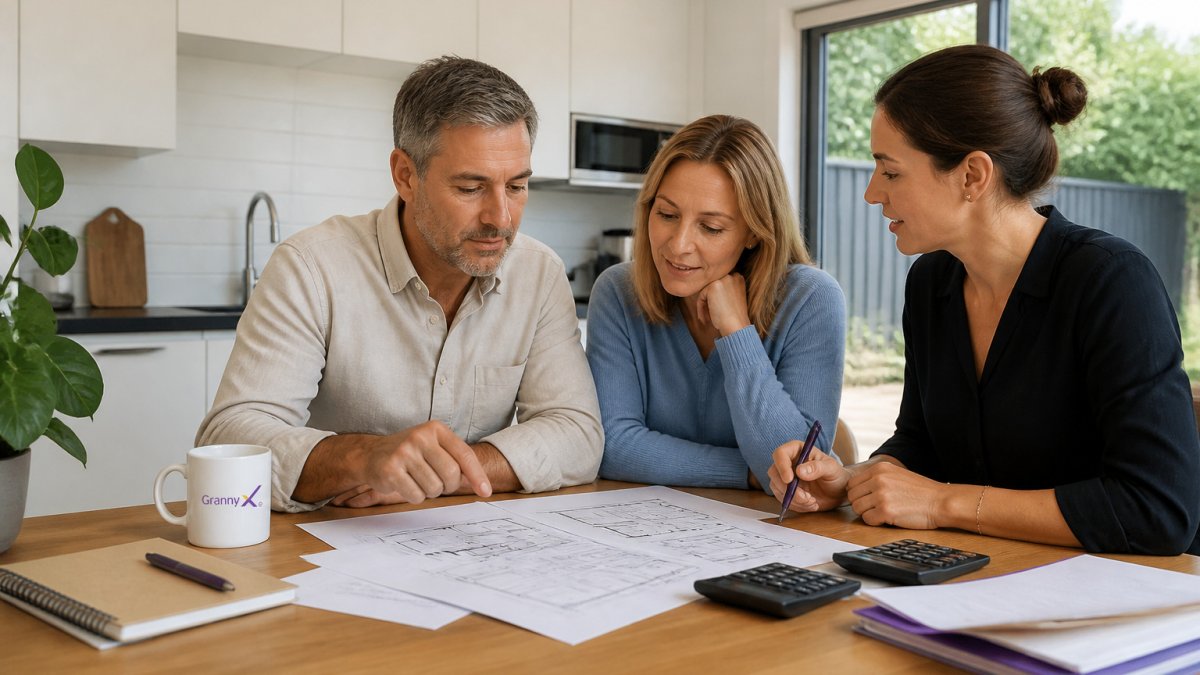
Start by writing down the inputs in two columns: income and costs.
Income side
- Expected weekly rent for a comparable secondary dwelling in your area
- A vacancy allowance, most practitioners plan for at least two to four weeks a year, and more in softer rental markets
- Any other income, such as a small utility contribution if the flat is separately metered
Cost side
- Total build cost, including site work, connections, landscaping and council fees
- Loan interest if you are borrowing, calculated over the life of the loan rather than year one only
- Insurance for the secondary dwelling and any landlord cover
- Council rates, water and sewerage charges attributable to the flat
- Maintenance and repairs, a common planning figure is around 1% of the build cost per year, though the right allowance depends on the build
- Property management fees if you use an agent, typically a percentage of rent plus letting fees
- Accounting costs if the rental changes your tax position
Run the net figure like this: take annual rent, subtract the vacancy allowance, subtract operating costs and loan interest, and divide the result by the total project cost. That gives you a net yield you can compare against other uses of the same capital.
Net yield will typically sit below gross yield once vacancy, interest and maintenance are included, and the gap can be substantial. You can test your own rent and build cost figures in the Granny Flat Investment Return Calculator. That gap is the point. If the project only stacks up on gross yield, it does not stack up.
We recommend running your figures through the Australian Taxation Office guidance on rental property income and deductions before you rely on any result, since deductible costs change the net return. An accountant can confirm which costs apply to your situation.
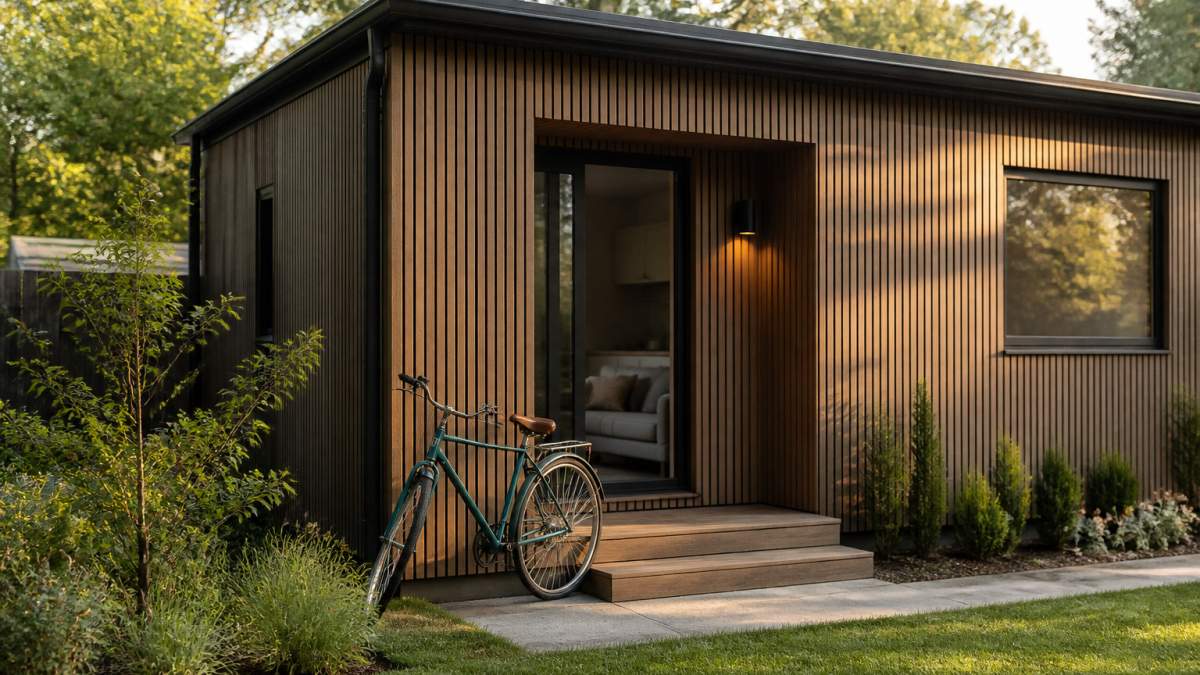
!A backyard granny flat with timber cladding and a small garden, a tenant's bicycle leaning against the entry step in soft morning light
Your own calculation will not match anyone else's, and that is fine. The point is to see how sensitive the return is to rent and cost. Small changes in either can shift the outcome more than owners expect, which is why the next step is to test the downside, not just the base case.
Granny Flat Construction Cost: Itemising the Full Budget
Construction cost is where many projects drift off plan. The build itself is only one line. Site preparation, utility connections, landscaping, council fees and finishes all add up.
Break your budget into clear categories before you commit:
- Design and approvals
- Site preparation and excavation
- Foundation and structure
- Utility connections
- Interior fit-out and fixtures
- Landscaping and external works
- Contingency for unexpected costs
Itemising makes the budget easier to compare and harder to inflate. Ask for a fixed-price quote where possible, and check exactly what it includes. Watch out: a low headline price often leaves out connections or site work that appear later as variations.
Pricing depends on your block and specification, so contact Granny X through its website for a current quote.
Granny Flat Payback Period: When the Project Breaks Even
The payback period shows how long the rental income takes to repay the build cost. The simple version divides total project cost by annual net rental income. The useful version tests that number against the things that actually go wrong.
Build the base case first. Use the net rental income from your yield calculation, after vacancy, operating costs and loan interest, not the gross rent. Divide the total project cost by that figure to get a rough payback in years.
Book Your Free Site Assessment →
Then stress-test it. A single payback figure hides risk. Model at least four scenarios and write down the payback for each:
- Lower rent. Reduce the expected rent by a realistic margin, for example, the difference between the advertised rent and what comparable flats actually achieve after a vacancy period.
- Longer vacancy. Add several extra weeks of vacancy per year, which is common in softer markets or where the flat competes with nearby apartments.
- Construction overrun. Add a contingency for the build cost. Variations, site surprises and connection delays are the usual culprits, and they push the break-even point out directly.
- Higher interest rates. If you are borrowing, recalculate at a rate one or two percentage points above your current loan. Interest is a real cost that extends the payback timeline.
Run the scenarios together, not one at a time. A project that survives lower rent and a construction overrun at the same time is far more resilient than one that only works in the best case.
Financing changes the timeline more than most owners expect. Loan interest adds to the cost, and if you are repaying principal as well, the cash flow in the early years is thinner than the headline rent suggests. Include repayments in your calculation, not just the principal.
Tax affects the picture too. Rental income is generally assessable and some costs may be deductible, which can improve the after-tax return, but deductions do not fix a project that fails on cash flow. Speak with an accountant before you rely on any after-tax figure.
A common mistake is assuming the flat will be tenanted every week of the year. Plan for a realistic vacancy allowance, and treat any payback figure that assumes full occupancy as a best case rather than a granny flat investment plan.
Secondary Dwelling Planning Rules in Victoria
Planning rules decide whether your project is straightforward or slow. In Victoria, some small secondary dwellings can proceed without a full planning permit, but this depends on the size of the dwelling, the block and local controls.
Check the rules that apply to your property before you design anything. The Victorian Planning Provisions and planning schemes set out the zone and overlay controls that often matter most. Your local council can confirm how they apply to your site.
Get this step right early. Redesigning a flat after a planning refusal costs time and money that can erase much of the expected return.
Tax, Insurance and Resale Impacts to Weigh
A granny flat changes more than your rental income. It can affect your tax position, your insurance cover and what a buyer will pay when you sell.
Consider these points:
- Rental income is generally assessable, and some costs may be deductible
- Insurance needs to cover the secondary dwelling and any rental use
- Buyers may value a well-built, approved flat differently from an unapproved one, and you can see what buyers actually pay for when a granny flat is on the property.
- Unapproved or poorly documented work can cause problems at sale
Speak with an accountant and your insurer before you build. They can explain how the project fits your circumstances.
Before building, weigh how the flat may affect your tax, insurance and resale position.
| Factor | What to check | Why it matters |
|---|---|---|
| Rental income | Generally assessable | Affects your tax position |
| Costs | Some may be deductible | Can improve after-tax return |
| Insurance | Must cover secondary dwelling and rental use | Protects against uncovered loss |
| Approval status | Approved flats may be valued differently | Affects sale price |
| Documentation | Unapproved or poorly documented work | Can cause problems at sale |
Downside Scenarios and Next Steps for Your Block
No investment is risk-free, so test the downside before you proceed. Ask what happens if the rent falls, the build runs over budget, or the flat sits empty for several months. If the project still makes sense in those scenarios, it is more likely to hold up in practice.
A site assessment is a sensible next step. It confirms whether your land suits a secondary dwelling and gives you a clear picture of costs and approvals. Granny X offers a free site assessment to confirm feasibility.
Frequently Asked Questions
Can I build a granny flat for AUD 100,000?
Possibly, but a figure that low rarely covers everything. Build cost depends on site access, slope, soil conditions, connections to water, sewer and power, and the finish level. Get an itemised quote covering design, approvals, site works, connections and the building itself before deciding. Granny X offers a free site assessment that can help you see which costs apply to your block. Current pricing depends on the specifics of your site and specification, so contact Granny X through its website for a quote.
How long does it take for a granny flat to pay for itself?
The payback period is the total project cost divided by the net annual income after expenses such as rates, insurance, maintenance, vacancy and management. Because net income varies with rent, occupancy and running costs, the result can differ widely between properties. Build out a sensitivity table using conservative vacancy and cost assumptions, not best-case figures, so the payback estimate holds up if a tenant leaves for several months.
Does adding a granny flat increase a property's resale value?
It can, but it is not guaranteed. A well-built, compliant dwelling with separate services may appeal to buyers, while an approval gap, poor construction or a design that reduces the main home's usable space can lower value or complicate a sale. Keep council permits, building records and certificates organised, and check with a licensed valuer or conveyancer how a secondary dwelling will be treated where you plan to sell.
Do planning and building rules affect whether a granny flat is a worthwhile investment?
Yes. In Victoria, some small second dwellings can be built without a planning permit when they meet specific siting, size and design requirements, while others need full approval, which adds time and cost. Check the rules with your local council and confirm that building approval and any required permits are in place before you commit funds. Rules change, so verify the current requirements for your address.
Ready to see what your block could do? Book your free site assessment with Granny X and get a clear, property-specific view of feasibility, costs and expected returns.