 How-to
Passive Income From a Backyard Granny Flat: 2026 Guide
Table of Contents
- Why a Backyard Granny Flat Is the Simplest Second Income Stream
- Granny Flat Rental Income: What You Can Realistically Earn
- Granny Flat Rental Yield: From Low Single Digits to High Single Digits
- Granny Flat Construction Costs and What They Mean for Payback
- Granny Flat Tax Implications: Depreciation, Deductions and Capital Gains
- Approvals, Financing and the Step-by-Step Feasibility Process
- Which Rental Strategy Fits Your Goals?
- Risks, Vacancy and How to Protect Your Investment
- Frequently Asked Questions
Last Updated: October 21, 2026
Why a Backyard Granny Flat Is the Simplest Second Income Stream
Passive income from a backyard granny flat is the rare property play that doesn't need a second mortgage, a tenant hunt across town, or a full-scale development approval.
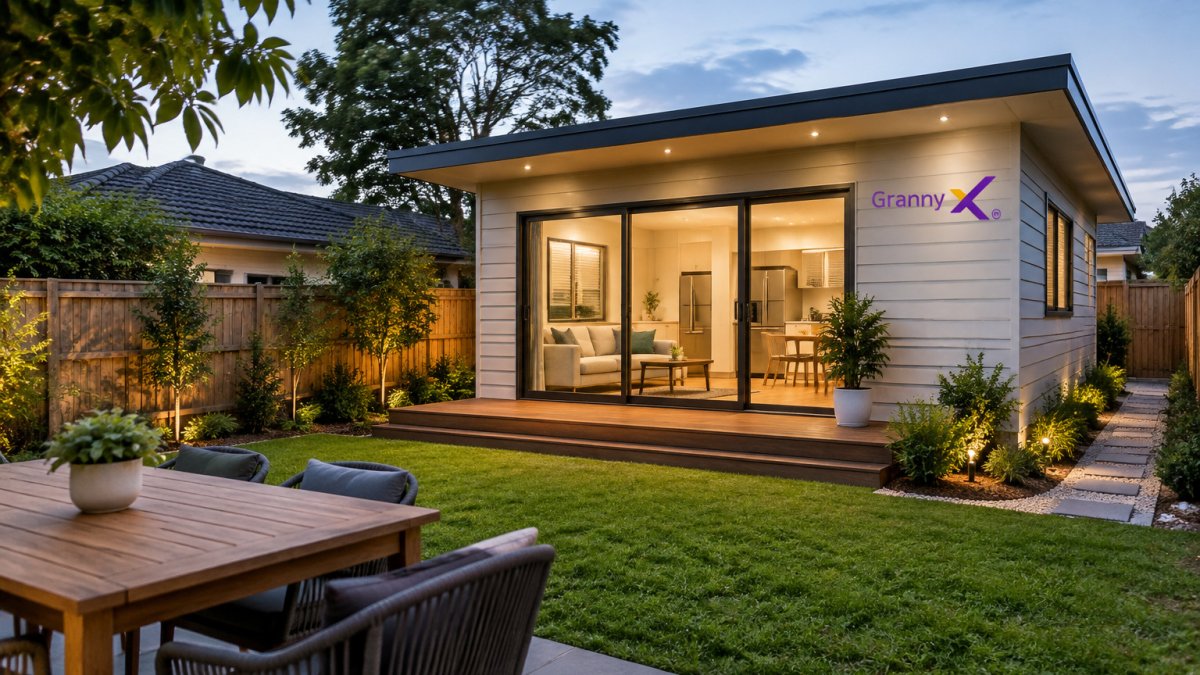
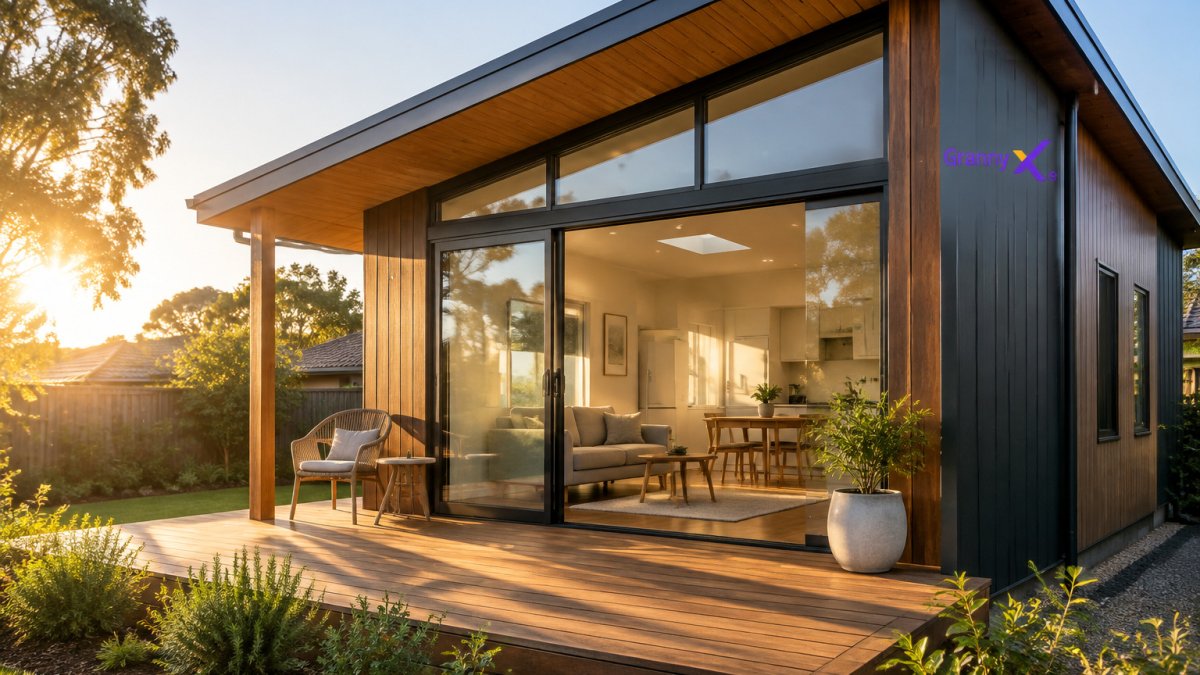
At Granny X, we empower Victorian property owners to effortlessly unlock significant second incomes by transforming their land with premium, high-return granny flats. A granny flat, also called a secondary dwelling, is a self-contained home on the same title as your house, with its own kitchen, bathroom and entry.
Here's the part most guides skip: the income isn't the headline rent figure. It's what's left after costs, and that number pays your bills.
Below, we'll show you what a granny flat can realistically earn, what it costs, how the tax works, and how to check whether your block stacks up before you spend a dollar.
Granny Flat Rental Income: What You Can Realistically Earn
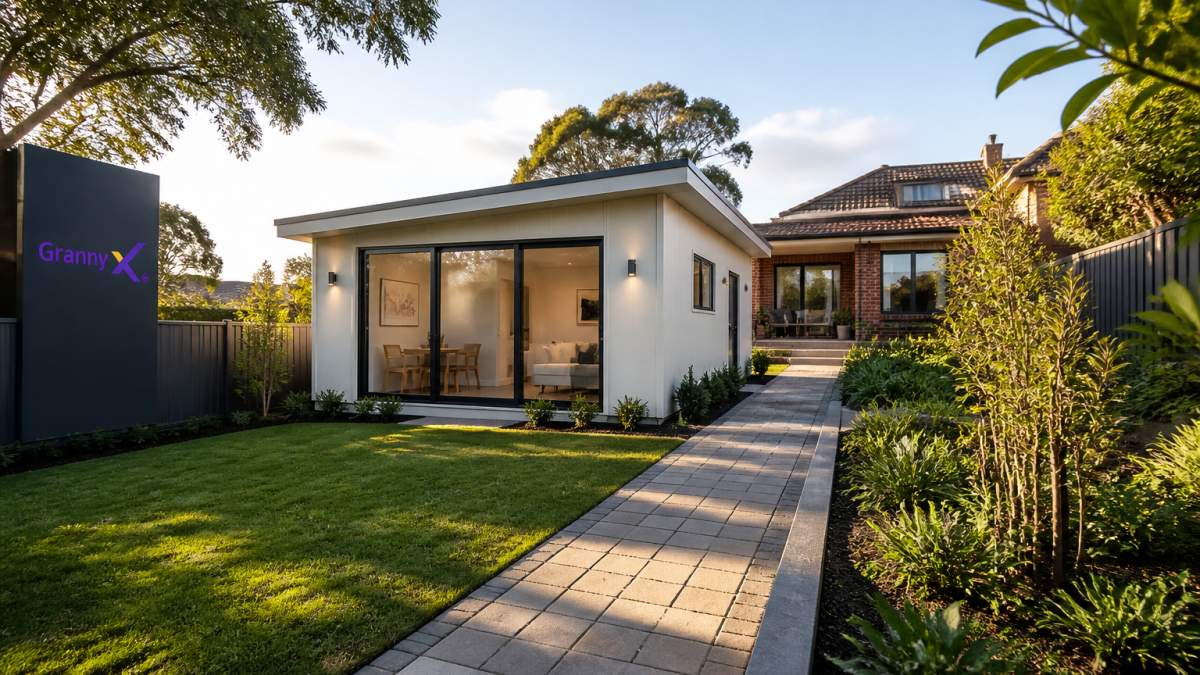
Granny flat rental income depends far more on your suburb and layout than on any national average. A one-bedroom in a tight rental market can pull more per week than a two-bedroom in a low-demand area, even though the two-bedroom costs more to build.
Work from local evidence, not wishful thinking: check current listings for self-contained one and two-bedroom homes within a few kilometres of your block. That's your real benchmark.
Weekly, Monthly and Annual Rent Benchmarks
Use this table to map a weekly rent to annual figures, then subtract your costs. The numbers are illustrative placeholders. Replace them with real local listings before you commit.
| Weekly rent | Monthly (approx.) | Annual (gross) | Annual after 4 weeks vacancy |
|---|---|---|---|
| $350 | $1,517 | $18,200 | $17,500 |
| $450 | $1,950 | $23,400 | $22,500 |
| $550 | $2,383 | $28,600 | $27,500 |
| $650 | $2,817 | $33,800 | $32,500 |
What Drives the Rent You Achieve
Five things move the needle most:
- Location: proximity to transport, shops and schools
- Size and layout: a genuine two-bedroom beats a cramped one-bedroom
- Finishes: a modern kitchen and bathroom justify a premium
- Privacy and access: a separate entry and own outdoor space matter to tenants
Build quality is where cheap builds unravel. A concrete slab and timber frame hold up better over a decade of tenants than shortcut construction, and that shows up in both rent and resale.
Granny Flat Rental Yield: From Low Single Digits to High Single Digits
Granny flat rental yield is the annual rent divided by the total cost of the project, expressed as a percentage. It's the cleanest way to compare a granny flat against any other investment.
Most standard residential investment sits in the low single digits. A well-planned granny flat can push the combined yield on your whole property into the high single digits, because you're earning rent from land that previously earned nothing.
You're not buying a new asset, you're switching on income from one you already hold.
Granny Flat Construction Costs and What They Mean for Payback
Granny flat construction costs vary widely with size, site access, slope and finish level. A flat block with easy access costs less than a sloping site needing excavation and retaining. Here's how the money stacks up, and how to turn a build cost into a defensible payback period.
What a Build Typically Costs
As a working range, a self-contained one-bedroom secondary dwelling typically lands between $120,000 and $180,000, and a two-bedroom between $180,000 and $260,000, depending on site conditions and finishes. These are planning ranges, not quotes, a sloping block or premium finishes can push above the top, a flat site with easy access can come in below.
The big cost buckets are:
- Site preparation and excavation
- Slab and frame
- Fit-out: kitchen, bathroom, flooring
- Services: power, water, sewer connections
Two buckets owners routinely underestimate: service connections (sewer and power runs can add tens of thousands on an awkward block) and approval costs (planning and building fees, plus any council-required reports).
Turning Cost Into Payback
Payback period is total project cost divided by annual net income. Worked example: a two-bedroom build at $220,000 all-in, rented at $550 a week, grosses $28,600 a year. After a four-week vacancy allowance, insurance, maintenance and management, net income might land around $22,000, a simple payback of roughly ten years, before any loan interest. Run the calculation with your numbers, not a headline rent figure.
Working Out Your True Net Income
Gross rent is not your income. Net income is what's left after the bills. Run this calculation before you build:
- Start with annual gross rent
- Subtract an allowance for vacancy, even a few weeks a year
- Subtract landlord insurance
- Subtract maintenance and repairs
- Subtract any management fees
- Subtract loan interest if you're borrowing
- What remains is your net income
That final figure is the one to compare against your costs. A build that looks strong on gross rent can look ordinary once vacancy, insurance and interest are stripped out, which is why payback maths matters more than the rent estimate.
Granny Flat Tax Implications: Depreciation, Deductions and Capital Gains
Granny flat tax implications catch owners out because a granny flat isn't treated like a normal investment property in every respect.
Book Your Free Site Assessment →
Capital gains tax is the part to get advice on. Because the flat usually sits on the same title as your home, the main residence exemption can be affected.
Talk to a qualified tax adviser before you build, not after. The Australian Taxation Office guidance on rental properties is the place to start understanding your obligations.
Approvals, Financing and the Step-by-Step Feasibility Process
Approvals are where most owners expect pain and often find less than they feared, but they're also where the income is won or lost. A granny flat that can't be lawfully rented separately, or breaches council siting rules, isn't an income stream, it's a very expensive spare room. Feasibility has to start with the rules, not the rent estimate.
The Planning Rules That Decide Whether You Can Earn
Secondary dwelling rules are set by state and territory planning policies and then applied by local councils, so they vary by location. The questions that matter most:
- Zoning: is a secondary dwelling a permitted use on your block, or does it need a planning permit?
- Minimum lot size: many councils set a minimum block size before a secondary dwelling is allowed.
- Maximum floor area: caps on the size of the dwelling (commonly in the 60-90m² range) apply in many areas.
- Setbacks and siting: rear and side setbacks, site coverage and private open space requirements all constrain where the flat can sit.
Get each answer in writing before you spend on design. A free site assessment should confirm your block can physically take a dwelling, check local rules on size, setbacks and siting, and confirm whether you're on a planning-permit or faster complying pathway.
Financing Options and Borrowing Impacts
Most owners fund a granny flat through equity in their existing home, a separate investment loan, or savings, each affects borrowing capacity and tax position differently.
Using equity is common because it's often the cheapest money available; a separate loan keeps the accounting clean. Model repayments against expected net rent before you sign anything, and stress-test at a higher rate than today's, a rate rise on a committed build comes straight out of your pocket.
The Step-by-Step Feasibility Process
Here's the sequence we walk owners through:
- Free site assessment: confirm your block can physically take a dwelling
- Check local rules: confirm zoning, minimum lot size, floor-area caps, setbacks and siting requirements
- Confirm approvals pathway: planning permit or complying pathway, and any occupancy or separate-rental conditions
- Get a site-specific quote: real numbers, not estimates
- Arrange finance: match the loan to the project and stress-test repayments
- Design and permit: finalise plans and lodge
- Build: slab, frame, fit-out
- Tenant and hand over: start earning
Skipping step two or three is the most common and most expensive mistake. Owners who confirm the rules first build with confidence; owners who build first sometimes discover the income they planned isn't permitted.
Which Rental Strategy Fits Your Goals?
Not every owner wants the same thing from a granny flat. The right rental strategy depends on whether you want maximum income, minimum hassle, or long-term capital growth.
| Strategy | Best for | Trade-off |
|---|---|---|
| Long-term lease | Stable income, low effort | Lower rent than short stays |
| Short-stay letting | Higher nightly rates | More management, more vacancy risk |
| Family use | Flexibility, no tenant issues | No rental income |
| Mixed use | Balance of income and flexibility | More complex to manage |
For most busy owners, a long-term lease wins: predictable, low-effort, and the tenant handles the day-to-day.
At Granny X, our end-to-end service includes tenanting support, so owners who want income without the management load have a clear path.
Risks, Vacancy and How to Protect Your Investment
Every income stream carries risk. Vacancy is the most obvious, a few weeks empty each year is normal, and your numbers should assume it.
Other risks worth planning for:
- Repair costs: budget a maintenance allowance from day one
- Bad tenants: screening and landlord insurance are your protection
- Regulatory change: rules on short-stay and secondary dwellings evolve
- Overcapitalising: a build that costs more than it adds in value hurts your return
The best protection is a feasibility check done properly before you build: confirm the numbers, the approvals, and the demand in your area.
The challenge with any second income stream is that the numbers only work if the groundwork is right.
Frequently Asked Questions
How much rental income can a backyard granny flat generate?
Most owners aim for a one-bedroom or two-bedroom secondary dwelling and rent it on a standard residential lease. Granny X positions its builds as generating roughly $20,000 to $40,000 in annual rent, which depends on the size, layout, finishes and local rental demand. Weekly rent is the figure to test first: multiply it by 52, then subtract a vacancy allowance of a few weeks a year, before you treat any of it as passive income. Gross rent is not the same as net income.
What costs should you include when calculating granny flat rental yield?
Start with the total build cost, then add site works, connection of services, approvals and any landscaping. On the income side, use realistic weekly rent across 50 weeks rather than 52. Against that, deduct management fees, insurance, maintenance, council rates and any loan interest. Granny flat rental yield calculated on gross rent alone flatters the numbers; a net yield after costs is the figure that tells you whether the project pays for itself.
Does adding a granny flat increase a property's value?
A well-built secondary dwelling adds lettable floor area and a second income stream, both of which appeal to future buyers and investors. The uplift depends on build quality, how the dwelling sits on the block, privacy and separate access, and whether it is properly approved. An unapproved structure can deter buyers or create problems at sale, so confirm the approvals position before you build. Long-term capital growth on the whole property is the second half of the return.
What tax applies to granny flat rental income?
Rent from a secondary dwelling is generally assessable income, and you can typically claim deductions for expenses incurred in earning it, including interest, repairs, insurance and depreciation on the building and fixtures. The capital gains tax position depends on whether the dwelling is treated as part of your main residence or a separate income-producing asset. Rules are specific and can change, so get advice from a registered tax agent before you commit to a build.